Mobile gaming demands honest performance testing and analysis.
MobPulse Gaming is an independent editorial desk covering handheld titles on iOS and Android. Modern mobile titles push silicon hardware harder than ever, yet most coverage treats phone games as shallow distractions or recycled app store clones. We test frame stability, measure battery draw, evaluate monetization models, and break down tactical systems so you spend your screen time on games worth playing.
Why mobile gaming needs technical critique
Smartphone gaming generates the largest share of player activity worldwide, yet mainstream coverage rarely examines how these titles function under the hood. App store algorithms prioritize predatory monetization loops and review-farmed rating scores over technical execution.
Disguised Combat Stutters
A title can look stunning in a pre-rendered promotional video while dropping to twenty frames per second during crowded multiplayer skirmishes on last year's flagship phone.
Passive Cooling Limits
Glass slab chassis design traps thermal energy. When internal SoC temperatures pass forty-five degrees Celsius, aggressive safety governors choke clock frequencies without warning.
Gacha Pity Mathematics
App store five-star ratings rarely detail the cumulative dollar outlay required to stay viable on competitive leaderboards. We audit stamina systems and convoluted drop probabilities.
Touch Digitizer Latency
A disparity between a 120Hz touch sampling rate and 720Hz gaming panels introduces physical millisecond penalties in tactical shooters where milliseconds decide engagements.
What our benchmark suite tracks on iOS and Android
Our testing protocol does not rely on subjective impressions or synthetic single-core CPU benchmarks. We record telemetry during sustained thirty-minute sessions on current-generation hardware, including baseline iPhones, Snapdragon flagships, and budget MediaTek chipsets. When a game stutters due to shader compilation issues or unoptimized memory pools, our reviews document the failure with exact hardware profiles.
Reveals severe frame pacing spikes and dynamic asset hitching during heavy combat sequences, particle explosions, and dense squad encounters that average FPS numbers conceal.
Continuous thermal telemetry across the rear glass and perimeter rails pinpointing the exact minute passive cooling saturates and thermal throttling reduces graphics clocks.
Measured directly in milliampere-hours to calculate true off-charger longevity during intense graphics loads rather than relying on manufacturer battery life estimates.
Sustained performance metrics across mobile tiers
A direct comparison of sustained frame reliability, surface thermals, and touch latency across primary handheld device classes running heavy live-service client loads.
| Device Tier | Target Frame Rate | 1% Low Floor | Peak Surface Temp | Touch Response |
|---|---|---|---|---|
| Dedicated Gaming Phones Active Cooling Fans • Bypass Charging | 120 FPS Locked | 108 - 114 FPS | 38.2°C Stabilized | 12ms (720Hz Digitizer) |
| Current Flagship Smartphones Passive Graphite • Vapor Chamber | 60 / 120 FPS Mode | 47 - 52 FPS (Throttled) | 44.8°C Peak Rear | 24ms (240Hz Digitizer) |
| Mid-Tier & Previous Gen Handsets Aluminum Frame • Standard SoC | 60 FPS Target | 34 - 39 FPS Variable | 42.1°C Controlled | 38ms (120Hz Digitizer) |
| Budget & Cloud Client Terminals Plastic Enclosure • Entry Chipset | 30 / 60 FPS Cloud | 22 - 27 FPS Native | 37.6°C Low Power | 52ms Total (Touch + Network) |

Customized capacitive dead zones and haptic engine pulse timings determine if rapid claw rotations trigger phantom inputs or dropped camera tracking.
The reality of modern touch controls and input latency
Playing a fast-paced shooter or character action title on a capacitive glass screen introduces unique input hurdles that console controllers do not share. Touch sampling rates vary wildly between 120Hz budget panels and 720Hz dedicated gaming displays, drastically affecting input lag. We evaluate control layouts based on button clustering, customizable dead zones, and haptic response calibration. If an action game fails to register multi-finger claw inputs or drops camera tracking when two fingers cross paths, we highlight those interface flaws before you commit hours to muscle memory.
Dead-Zone Customization
Testing whether analog thumbstick emulations permit fine aim micro-adjustments without sudden deadband snapping.
Haptic Pulse Calibration
Evaluating linear resonant actuators for tactile confirmation of reload triggers, ability cooldowns, and critical hits.
Navigating aggressive monetization and free-to-play mechanics
Mobile monetization has evolved far beyond the simple banner ads of the previous decade. Today's marketplace features multi-layered currencies, stamina meters, randomized gacha banners, and time-gated character progression. We dissect every game's commercial economy with complete transparency.
Competitive Outlay Cost
Our writers calculate the raw cash cost required to reach competitive viability in multiplayer ranks or to finish high-end campaign content without grinding synthetic progression gates.
Pity Threshold Verification
If a title prevents progression behind arbitrary paywalls or hides real pull probabilities behind convoluted pity mechanics, we document the mathematical likelihood of rolling target banners.
Stamina & Time-Gating
We evaluate energy meters, arbitrary upgrade timers, and login streak requirements designed to exploit psychological habits rather than reward strategic mastery.
Curated genres built for touch architecture

Tactical depth across contemporary mobile strategy titles
Tower defense, asynchronous strategy, and turn-based tactics have found a natural home on touch screens. Games like Arknights, Into the Breach, and Teamfight Tactics demonstrate that tactical depth thrives when interfaces accommodate methodical input. We evaluate these titles on decision variety, algorithmic pathfinding, unit balancing, and AI responsiveness. Strategy is more than waiting on an upgrade timer; it requires counter-play, map awareness, and careful resource management.

High-stakes competitive mobile shooters
Mobile battle royales and tactical first-person shooters command competitive scenes with global player bases and professional tournament circuits. Titles such as PUBG Mobile, Call of Duty: Mobile, and Rainbow Six Mobile demand precise crosshair tracking, spatial audio awareness, and stable server tick rates. MobPulse tracks weapon balancing patches, recoil pattern adjustments, and map rotations. We also investigate how controller accessories and emulator bypasses impact lobby fairness on competitive ladders.

Role-playing systems and open-world mobile exploration
Open-world action role-playing games now pack multi-gigabyte client installations and console-quality rendering pipelines onto mobile storage chips. Titles like Genshin Impact, Honkai: Star Rail, and Wuthering Waves demand massive data caching and constant GPU bandwidth. We review these expansive worlds by checking draw distance scaling, anti-aliasing techniques, and dialog pacing. We also track whether daily chore loops crowd out the satisfaction of genuine narrative discovery.

Standalone premium releases without microtransactions
Independent developers regularly publish paid, offline experiences that respect player attention and device storage. Ports of titles like Dead Cells, Slay the Spire, and Papers, Please demonstrate that one-time purchases can succeed on touch platforms. MobPulse dedicates regular editorial space to these self-contained releases, celebrating thoughtful touch adaptations, responsive virtual sticks, and zero-monetization game design.
The role of cloud gaming and local streaming on handsets
Local hardware rendering is no longer the only way to play complex interactive titles on a telephone. Services like Xbox Cloud Gaming, GeForce NOW, and local streaming via Moonlight let players access desktop-class rendering on mobile displays. We evaluate how cellular carrier latency, Wi-Fi 6 stability, and Bluetooth controller packet loss influence the viability of remote gameplay. While cloud streaming removes the burden of thermal throttling, it introduces input overhead that demands careful network configuration.
Maximum end-to-end network latency required before streaming action games lose perceptual responsiveness.
Handheld gaming hardware versus general-purpose flagships
The boundary between a daily smartphone and a dedicated mobile gaming machine continues to widen. Purpose-built gaming phones feature active cooling fans, dual USB-C charging ports, ultrasonic shoulder triggers, and bypass charging circuits that power the board without heating the battery. Standard consumer flagships, conversely, prioritize camera arrays and slim industrial designs that choke sustained GPU clock speeds within fifteen minutes. Our hardware coverage helps you decide whether dedicated gaming features justify carrying a heavier, specialized chassis.
- Active fan circulation vs passive vapor chamber drop-off
- Ultrasonic shoulder trigger map reliability
- Bypass charging circuits protecting battery health
Peripheral compatibility and physical controller attachments
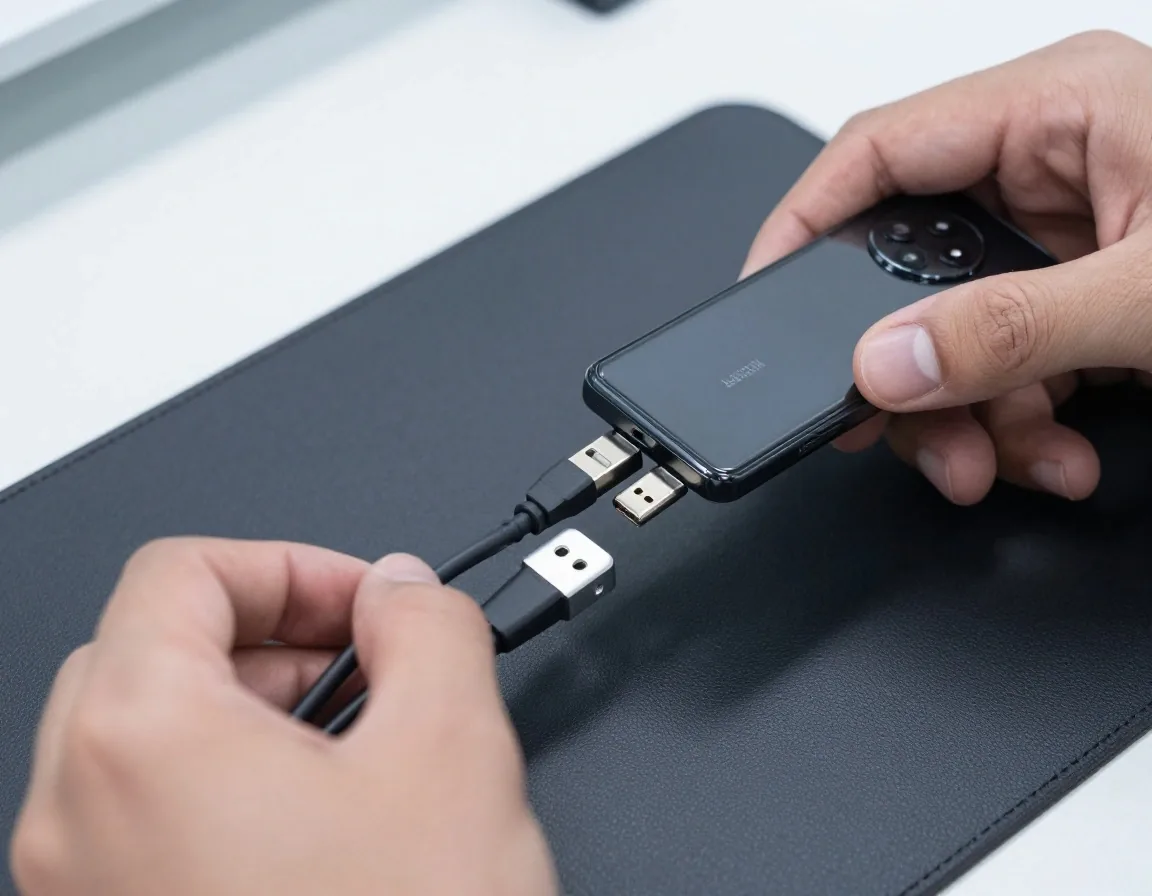
Clamping controllers, clip mounts, and external cooling fans transform a mobile device into an ergonomic handheld console. We inspect peripheral hardware for telescopic tension balance, USB-C pass-through latency, analog stick dead zones, and tactile button resistance. Our reviews identify which accessories require third-party mapping software that might risk account bans in competitive titles, steering you toward plug-and-play hardware that uses native OS gamepad drivers.
- Direct USB-C zero-latency telemetry vs Bluetooth polling
- Hall-effect magnetic thumbsticks preventing drift
- Verification of native HID driver compliance (Anti-ban safe)
Battery health management during heavy rendering loads
Sustained 60 or 120 frames-per-second gaming generates localized heat that accelerates lithium-ion battery degradation over time. MobPulse analyzes how software settings like dynamic resolution scaling, frame-rate caps, and internal render multipliers preserve battery longevity. We explain how running a game at 45 frames per second on an adaptive refresh panel can cut power draw by a third without degrading perceptual responsiveness during long commutes.
Dynamic Resolution Balancing
Adjusting render scaling down to 85% preserves rasterization crispness on 400+ PPI mobile displays while dropping GPU thermal saturation significantly.
45 FPS Capped Refresh Targets
Adaptive 90Hz and 120Hz panels divided by exact frame factors eliminate micro-judder while extending sustained gameplay time by over 30%.
Preserving older devices through performance tuning
Not every gamer updates their handset on an annual upgrade cycle. A major pillar of our editorial work is discovering how well older processors handle modern live-service updates. We publish optimization workarounds for devices running two or three-year-old hardware, showing players how to disable memory-hungry background processes, clear graphic shader caches, and configure developer options to maintain playable frame rates.
Community strategies and collective meta analysis
Single-player guides often fall short when dealing with dynamic live-service mobile titles that receive balance updates every three weeks. MobPulse collaborates with guild leaders, high-ranked ladder veterans, and community theorycrafters to document evolving team compositions and meta strategies. We examine community data sheets to verify damage formulas, drop rates, and equipment synergy rather than relying on official developer marketing notes.
Empirical Formula Verification
Cross-checking actual in-game combat logs against published weapon damage coefficients to uncover hidden damage scaling cliffs and unannounced nerfs.
High-Tier Ladder Audits
Evaluating actual pick-rates and ban-percentages in top one-percent tournament brackets rather than relying on casual matchmaking win statistics.
Three-Week Patch Cycles
Documenting silent hotfixes, hit-box adjustments, and map layout revisions that change optimal rotation timings for competitive squads.
Practical performance and editorial questions
How does MobPulse measure 1% low frame rates during live gaming sessions?
Do mobile phone game controllers trigger automated security or anti-cheat bans?
Why is running mobile games at 45 FPS often better than attempting 60 FPS?
How does MobPulse Gaming maintain editorial independence?
Stay calibrated with empirical mobile analysis
Receive verified hardware benchmark tables, monetization teardowns, and tactical strategy breakdowns directly to your inbox. No promotional fluff or sponsored review scores.