
In-depth mobile game reviews focused on technical execution.
MobPulse reviews do not skim the surface of mobile games with generic summaries or developer bullet points. We spend dozens of hours inside each title, running frame-time monitors, stress-testing touch controls, and auditing the internal economy. Our goal is to provide clear, actionable critique so you understand how a game performs on real hardware and how much money or patience it demands before you press download.
Our core review philosophy and player-first stance
We approach mobile gaming with the same rigorous critical standards historically reserved for desktop and console releases. Mobile gamers deal with finite battery life, limited onboard storage, small glass touchscreens, and aggressive monetization models. Our review desk operates with zero commercial influence from game publishers or hardware manufacturers. When a high-budget release stutters, misleads players about drop rates, or hides basic quality-of-life features behind subscription tiers, our reviews state the facts plainly.
Sustained Hardware Stress
Full thermal stress passes measuring CPU and GPU throttling curves across extended 60-minute gaming runs instead of unrepresentative initial bursts.
Cash-to-Progress Auditing
Real currency outlays to audit progression friction, documenting paywalls, disguised gacha drop odds, and artificial stamina throttles.
Input Latency & Mapping
Touchscreen response delay logging and gamepad protocol evaluation across USB-C direct and Bluetooth wireless interfaces.
Netcode & Tick Integrity
Packet loss resilience, interpolation fairness, and tick rates evaluated during real cellular-to-Wi-Fi network transitions.
Mechanics and game loop evaluation
A mobile game can have impressive graphical presentation, but if the foundational gameplay loop is hollow or repetitive, it fails as interactive entertainment. We break down the minute-to-minute mechanics to reveal how tactile controls translate to actual player skill:
Touch input response times
How cleanly virtual thumbsticks and capacitive buttons map to spatial movement, camera drag, and multi-finger claw layouts without dead-zone drift.
Core decision-making density
Assessing tactical problem-solving versus passive or auto-play mechanics that strip agency away from the player to artificially simulate progress.
Meaningful progression incentives
Evaluating genuine skill-based mastery against artificially inflated stat grinds designed exclusively to encourage microtransaction level skips.
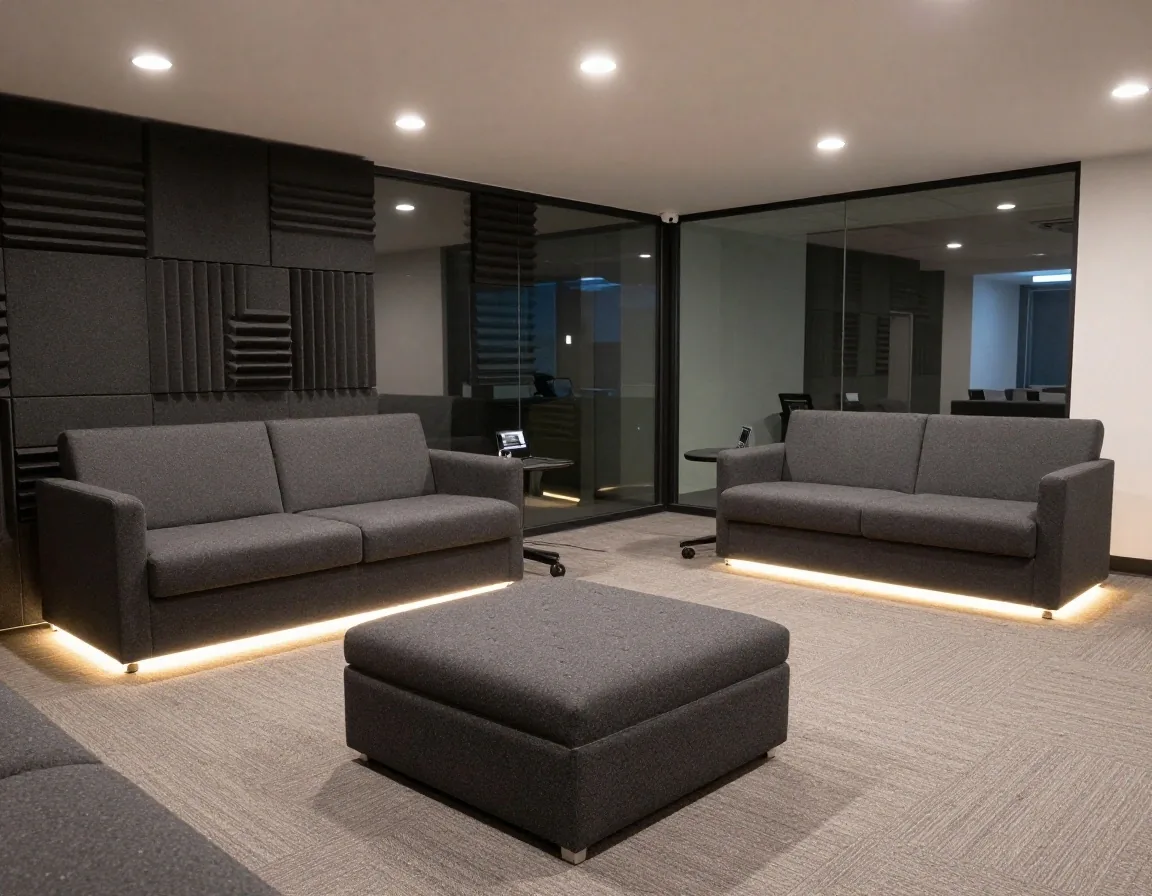
Touch latency calibration rig logging input-to-display refresh interval in milliseconds during high-frequency tap sequences.

Spatial positioning verification through binaural capture, checking channel separation and footstep auditory priority over background music.
Audio design and spatial awareness on mobile sound stages
Sound design on mobile devices must balance dynamic range for quiet internal phone speakers while delivering crisp spatial positioning over low-latency wired or wireless earbuds. In our reviews, we evaluate whether audio mixing allows players to distinguish subtle acoustic cues like distant footsteps, reloading animations, or environmental hazards. We also assess soundtrack composition, voice acting quality, and whether the audio engine supports low-latency codecs like aptX Adaptive or Apple AAC without introducing audio-video sync drift.
Speaker Dynamics
High-frequency distortion thresholds when internal phone stereo drivers run above 80% output volume.
Codec Latency
Bluetooth buffer delay measurements logging visual muzzle flash to auditory gunshot report in milliseconds.
Graphical rendering, resolution scaling, and asset fidelity
Modern mobile rendering pipelines feature volumetric fog, dynamic lighting, real-time reflections, and complex particle systems. However, developers frequently use aggressive dynamic resolution scaling that blurs textures to unreadable levels on smaller phone displays. We evaluate the visual presentation of every title at native resolution settings, checking for anti-aliasing artifacts, texture pop-in, shadow clipping, and UI readability across various aspect ratios and screen cutouts.
| Rendering Factor | Evaluation Focus | Observed Degradation | Review Severity |
|---|---|---|---|
| Dynamic Resolution Scaling | Native pixel rendering versus internal downsampling | Aggressive 540p drops during heavy particle battles | High Impact |
| Texture Mip-Mapping | Asset streaming distance on high-resolution displays | Sudden pop-in on terrain geometry within 20 meters | Moderate Impact |
| Screen Notch & Cutout Adaptability | UI placement and HUD anchor margins | Mini-maps or critical health bars obstructed by punch holes | Critical Flaw |
| Shadow Cascade Precision | Dynamic character shadows and ambient occlusion | Stair-stepping aliasing along high-contrast object borders | Low Impact |
Monetization structure and cash-to-progress ratios
We spend real money during review testing to verify how purchasing power alters the player experience. Our reviews categorize monetization into cosmetic battle passes, pay-for-convenience stamina skips, and predatory pay-to-win progression gates. We track the presence of psychological monetization tactics, such as expiring store bundles with arbitrary countdown clocks, multi-tiered currencies designed to obscure real costs, and concealed gacha pity rates. A game with engaging combat can still fail our review if its economic model exploits vulnerable players.
Cosmetic Only
Battle passes and skins with zero stat advantages or combat benefits.
Time Convenience
Energy refills and inventory slots that bypass artificial wait timers.
Pay-to-Win Gating
Exclusive numerical power spikes that alter competitive outcomes.
The 40-Hour Spend Benchmark
Every review documents free-to-play progression caps after 40 active hours. When a title decelerates progression by over 70% to nudge direct microtransactions, our final score reflects that deliberate friction. We document the true cost of reaching endgame content.
Frame rate consistency and thermal throttling testing
Peak frame rates mean nothing if a phone overheats and throttles down to half speed within ten minutes. We test games across multiple hardware tiers, logging sustained frame-time graphs rather than simple average frame rates.

Frame Pacing Uniformity
Micro-stutter detection during rapid 360-degree camera sweeps, measuring 1% low and 0.1% low frame interval spikes.

Clock State Throttling
Documenting the exact minute when device operating systems drop GPU frequency steps to prevent component damage.

High Refresh Discharge
Battery drain rates measured at native 60Hz, 90Hz, and 120Hz display modes to verify efficiency optimization.
Server netcode, tick rates, and matchmaking fairness
For competitive and co-operative multiplayer titles, the quality of network architecture is paramount. We assess server tick rates, roll-back netcode implementations, regional latency, and matchmaking algorithms. Our reviews document how titles handle packet loss, high-ping opponents, and mid-match reconnections. If an online shooter suffers from severe peeker's advantage or rubber-banding during cellular handoffs between 5G towers and Wi-Fi access points, we document those network flaws.
Competitive Netcode Checklist
Low tick rates result in registered hits around solid walls and misaligned bullet vectors.
Smooth interpolation prevents abrupt character snapping and rubber-banding during minor packet drops.
Players must seamlessly re-enter live ranked games without forfeiting progress or match MMR.

Direct-connect gamepad interface testing verifying analog stick deadzones and full key-remapping support.
Controller support and custom touch mapping capabilities
While touch controls are the primary interface for phone gaming, many players prefer using physical gamepads, clip-on controllers, or tablet stands. We test native OS controller support via Bluetooth and direct USB-C connections, evaluating button remapping options, dead zone adjustments, and analog trigger calibration. We also inspect how virtual on-screen controls behave, noting whether buttons can be resized, repositioned, or adjusted for opacity to prevent screen clutter.
Gamepad Integration
- Zero dead zone analog stick precision
- Native controller prompt display (ABXY vs Greek)
- Support for analog triggers in racing/shooters
Virtual HUD Customization
- Independent button scale & opacity sliders
- Multi-profile presets for 2, 3, and 4-finger claw
- Floating vs fixed position virtual joystick options
Live-service sustainability and patch roadmaps
A modern mobile game is rarely static; it shifts with balance updates, limited-time seasonal events, and content expansions. In our reviews, we evaluate developer transparency, community communication channels, and the consistency of bug fixes. We look at past track records to determine whether a studio supports their titles with substantial gameplay improvements or if they abandon older content in favor of rapid monetization drops.
Patch Note Granularity
Does the studio publish exact percentage numbers for weapon damage, ability cooldowns, and stamina costs, or vague descriptors like "minor balance adjustments"?
Storage Footprint Growth
We track client install bloating over 12 months, checking whether seasonal asset caches can be archived or if the game consumes unnecessary internal storage.
Community Recourse
Assessment of developer response speed when game-breaking exploits or server outages corrupt competitive tournament ladders and ranking points.
Our scoring framework and final verdict structure
Our reviews culminate in a descriptive technical score and a clear purchase or download recommendation. We avoid inflated number scales where average games receive nine out of ten.
A functional game with noticeable flaws, aggressive monetization friction, or unstable frame pacing during intensive visual scenes.
Sets standards for its genre. Delivers responsive touch input, transparent monetization, and stable sustained frame times across hardware tiers.
Reserved for landmark technical and design achievements that redefine what mobile hardware and tactile input are capable of rendering.
Review testing protocol details
How does MobPulse select devices for hardware testing?
Do publisher review codes influence review verdicts?
How often are reviews updated when major balance patches drop?
Where can readers request specific titles for benchmarking?
Stay informed on verified mobile game performance.
Get comprehensive technical evaluations, thermal benchmarking reports, and monetization audits delivered directly to your inbox.